
Start with a Delano Resident Question
The Delano residents directory is best approached as a choice of record trails. A current address points to a parcel, while a known name may point to a court case, business filing, license, voter status check, or newspaper notice. An older household needs a library shelf, census schedule, or deed chain. The first useful question is not simply “who is this?” It is whether the search concerns an owner, a voter, a recorded party, a past household member, or a person connected with a public activity.
That distinction keeps a Delano residents directory search accurate. Kern County records are spread among offices in Bakersfield, a Delano court branch, state portals, and Beale Memorial Library. None of those sources is a complete list of occupants. People not named in a source, unlisted households, and protected people may never appear in the same trail, so each result needs a clear label and a second point of confirmation.
- Write down the strongest starting clue. Keep the full name, name variants, street address, approximate era, parcel number, or event county exactly as known.
- Use Kern Property Search for an address route to an APN or ATN. The consumer assessor search does not provide an open owner-name directory.
- Use the recorder index for a deed, lien, or other instrument, then compare the indexed parties and legal description with the parcel.
- Use California’s My Voter Status tool only for a person’s own verification. An approved Kern voter-data request is a separate, restricted process.
- Move older research to Beale’s Local History Room, Delano newspaper microfilm, yearbooks, telephone directories, census schedules, or a targeted California Public Records Act request.
Note: A public record can anchor a name, place, or event without proving that the person occupies a particular home today.
Delano Resident Records in Bakersfield
Most name-bearing Delano records are kept outside City Hall. The Kern County Assessor-Recorder handles parcel information, deeds, liens, plats, and county vital copies. The County Clerk handles marriage licenses, confidential marriages, fictitious business names, notaries, and election functions. Kern Superior Court holds case files, including probate, while the Delano branch provides a local court location even though some records and services remain centralized in Bakersfield. The Elections Division holds the voter file under California’s permitted-use rules.
Kern County Assessor-Recorder
Recorder Division and property records
Counter service in Bakersfield
Copy counter: 8:00 a.m.-4:30 p.m.
Kern Recorder records overview
Kern County Elections Division
1115 Truxtun Avenue, 1st Floor
Bakersfield, CA 93301
661-868-3590
Kern Superior Court
Delano branch and countywide case system
Criminal and noncriminal searches separate
Portal registration required
Beale Memorial Library
701 Truxtun Ave., Bakersfield
Second floor Local History Room
661-868-0771; call ahead
Delano Branch Library at 925 Tenth Avenue, Delano, is the nearby Kern County Library access point, while Beale holds the deeper local-history material. A trip to Bakersfield may be necessary for an original record, a counter-only APN search, or a microfilm item. Online links are useful starting points, not substitutes for a custodian’s certified copy or an official map.
Delano Resident Roles and Records
A Delano residents directory can blur four different roles unless the result is named precisely. An assessee is connected with the tax roll. A deed party signed or received an instrument. A voter record concerns registration and permitted election data. An occupant may be present in a directory or newspaper without owning the parcel. The same person can fill several roles, but no one role should be silently treated as proof of another.
- Assessee or owner
- Connected with the Kern assessment route or a recorded instrument. The public consumer property result suppresses owner names.
- Recorded party
- Grantor or grantee named in a deed, lien, plat, or other indexed document. The recorder is organized by document number and parties.
- Registered voter
- A person’s own California status can be checked privately. Bulk or street-organized data requires a permitted purpose and application.
- Historical occupant
- A subscriber, household member, classmate, obituary subject, or newspaper name tied to a particular source and date.
Mailing address is tax correspondence. Situs address is the physical parcel. Neither one establishes who is inside the home. A legal description and APN are stronger bridges between a deed and a map, while a directory entry or newspaper notice supplies household context for its own publication year.
Note: Treat each finding as an evidence point with a source date, not as a complete Delano resident directory entry.
Delano Resident Property Fields
Kern Property Search is the main address-to-parcel doorway for a Delano lookup. It is free, but a CAPTCHA must be passed before the search fields load. The public interface accepts an APN, an ATN, or an address as alternatives. It does not offer an unrestricted owner-name search, and an address match returns a route into parcel information rather than a household list.
| Field or mode | Type | Required | Format and result note |
|---|---|---|---|
| Security code | CAPTCHA text | Yes | Must pass before the search controls appear. |
| Assessor Parcel Number | Text | Alternative | 8 or 9 digits; dashes are optional. |
| Assessor Tax Number | Text | Alternative | 10 or 11 digits; dashes are optional. |
| Property Address | Text | Alternative | Use the street name with an optional number; omit street type, city, and ZIP. Prefix matching returns the first 100 results. |
| Search or Reset | Buttons | Not applicable | Runs the search or clears the form. |
Begin with the full situs address, save the APN or ATN, and then open the Kern GIS interactive map. GIS can show parcel geometry, map-book context, tax-rate areas, easements, and legal lot lines. It is a convenience viewer. Kern says nearly 17,000 hardcopy assessment map sheets remain official, and the GIS data page warns that ancillary layers can be incomplete.
For a current owner trail, the public web route stops short of a name. A lawful counter or data channel is needed for any fuller roll field. That limit is why the property search belongs at the front of a Delano resident directory workflow, but never at the end of it.
Current Delano Resident Directory Sources
Current sources answer different questions. The assessor maps an address to a parcel. The recorder connects parties to instruments. Courts expose selected case events. State business and license registers show public affiliations. The voter status tool confirms a voter’s own registration. Together they create a careful resident directory trail, but none promises a full list of everyone living in Delano.
| Source | What it can establish | Keeper | Access |
|---|---|---|---|
| Property search and GIS | Address, APN, parcel shape, map context | Kern Assessor | CAPTCHA search and free GIS viewer |
| Recorder index | Indexed parties, recording date, document number, instrument type | Kern Recorder | Online grantor/grantee route and counter |
| My Voter Status | A voter’s own registration status and identity details | California Secretary of State | Private self-check |
| Court case portal | Case number, parties, events, and public register entries | Kern Superior Court | Account; 50 general-public cases per hour |
| Business, license, or unclaimed property index | Public affiliation, credential, or reported owner location | California agencies | Free search, with separate document rules |
The Secretary of State bizfile Online search can connect a name to a California entity, while the Department of Consumer Affairs license search can show a published license status. The State Controller’s unclaimed-property search may show a historical reported location, not a current home. For one person, the Delano resident lookup workflow puts those affiliations beside, rather than in place of, parcel and court evidence.
Note: An index result earns trust when its name, date, place, and second independent anchor agree.
The business-search screenshot below shows why an entity record is a public affiliation trail rather than a resident roll. The official California bizfile search is the source for the interface shown.
A filing can help separate people who share a name, but the entity’s address and agent information still need to be read as business records, not occupancy evidence.
Why Delano Records Stay Separate
Kern’s recorder explains an important local quirk: instruments are indexed by document number and grantor or grantee, not stored as one comprehensive property file. A Delano property search therefore has to be assembled. Start with the APN or assessee route, identify a deed, read its legal description, and then search the parties backward or forward. A single address box cannot replace that chain.
The distinction matters when an older deed uses a different street spelling or a tract description. The recorder’s public search mode is a grantor and grantee interface. Kern removed online APN searching of official records effective December 9, 2024, after AB 1785. APN searches are now available at Hall of Records or Recorder Annex kiosks, which makes the counter a meaningful part of the modern Delano records route.
Local record quirk. A parcel number gets the search started, but the recorder’s chain is built from people, document numbers, recording dates, instrument types, and legal descriptions.
Official-record copies begin at $3 for the first page or document under Government Code section 27366, with additional charges set out in the published schedule. The 2026 fee sheet is the safer source for current charges. Keep the document number before ordering, because deed-copy solicitations can charge a markup for a record the county can supply through its own channels.
Delano Court Search and Resident Records
A court result can confirm that a named party appears in a Kern case, but it is not a complete biography and it is not the official file. The Kern portal separates criminal and noncriminal searches and requires an account. General-public users are limited to 50 cases per hour. Selecting a public case can display a register of actions, while the underlying document may require a request to the clerk.
Criminal search. Use a case number or defendant name, followed by matching case data and a public status or register when available.
Noncriminal search. Use a case number or party criteria after login. Pre-September 25, 2025 case numbers should be entered without hyphens.
Federal search. Eastern District of California matters are reached through PACER, with court, party, case number, date, and region filters.
The Kern Superior Court online-services page carries the portal route and a warning about fraudulent payment texts. The portal’s registration, search limit, and document-request rules apply to the case search. The Delano branch page identifies the local location. Federal matters use a separate national court system and should be kept apart from Kern Superior Court notes.
A docket entry is a dated event, not necessarily the pleading or order itself. Juvenile, adoption, sealed, confidential, and protected family-law records do not become public merely because a name is known. A case match should be recorded with its case number, party role, filing date, and court location before it is compared with another Delano resident directory source.
The court-services screenshot is linked to the official Kern online-services page. It gives the portal context without turning a search result into a certified record.
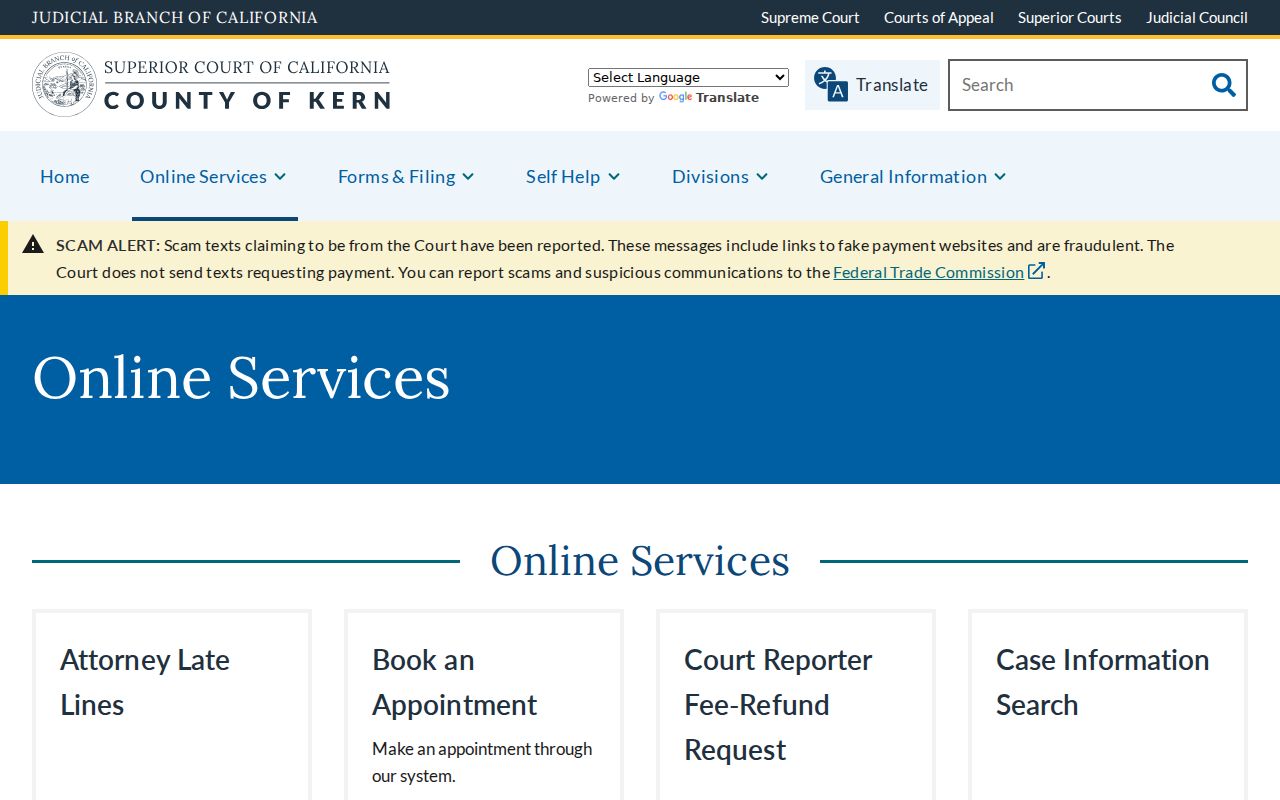
For an official copy, use the court’s Request Documents application or visit or write the clerk. The web index is a lead; the clerk’s file is the authority.
California Voter Status for Delano Residents
California’s My Voter Status tool is a private identity check, not a public Delano residents directory. It asks the voter for identifying information and returns status details to that person. Kern’s full voter file is different. The county application offers data files, printed alpha indexes, walking files organized by street, precinct, or district, and vote-by-mail or challenged-signature reports, but an applicant must certify a permitted election, scholarly, journalistic, political, or governmental use.
My Voter Status fields. The private form asks for first name, last name, and date of birth as identity inputs. A California driver-license or ID number, or the last four digits of a Social Security number, can be a conditional matching field. Those identifiers are not public search fields.
The Kern application lists a $45.50 countywide or named-district data file option, printed alpha indexes priced by thousand records, a printed street or walking file priced by thousand records, and FTP delivery choices for specified reports. Orders require identity, organization and contact details, requested geography, an ID copy, intended use, and a signed penalty-of-perjury certification. These are controlled records, not a casual street lookup.
The California voter-status form is the correct personal route, while Secretary of State registration guidance explains confidential-voter protections. California Elections Code sections 2188 and 2194 restrict voter-file disclosure and use. Driver-license number, Social Security number, and signature are confidential, and voting history shows participation, never ballot choices.
The voter-status screenshot is linked to the official form. It illustrates the difference between verifying your own registration and asking an agency for a restricted data extract.
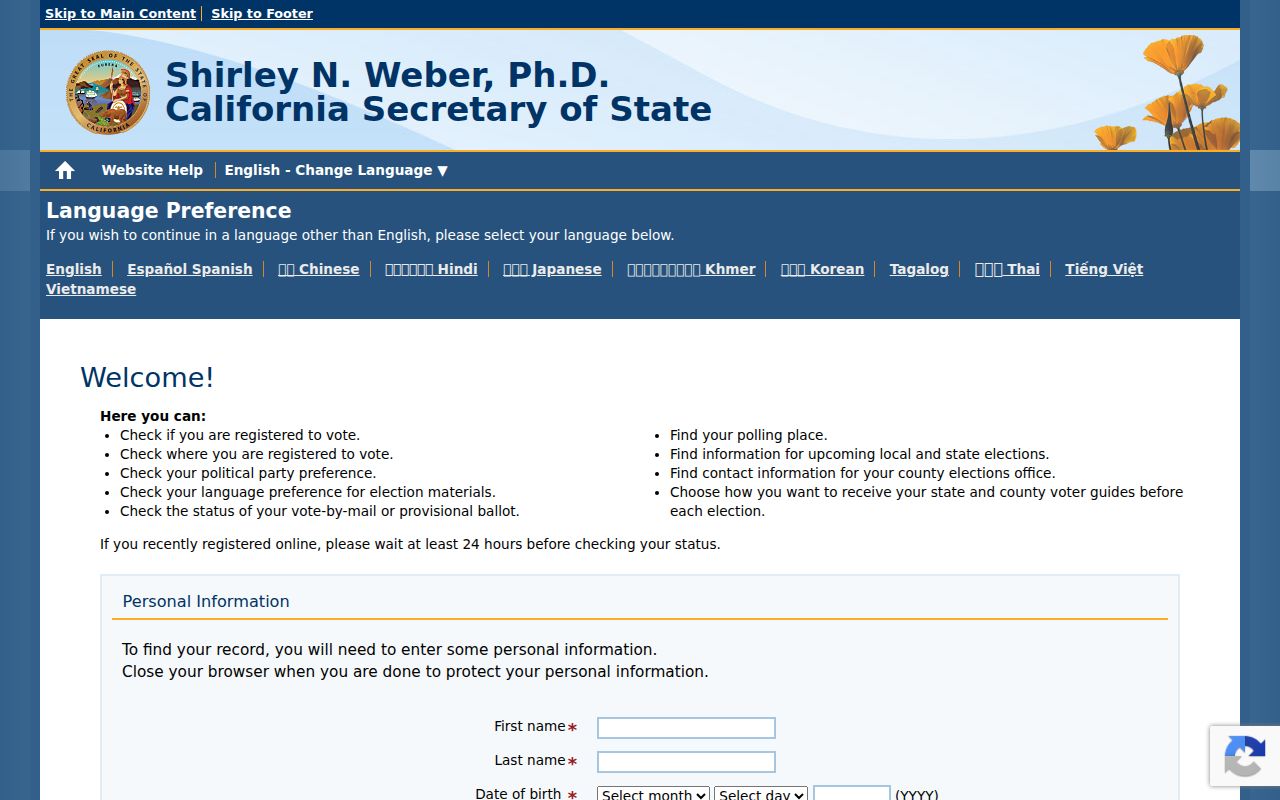
Safe at Home participants use confidential registration channels. An inactive or cancelled record can reflect list maintenance, a move, a death notice, or a voter request, and should never be treated as a current location.
The Delano Library Trail for Past Residents
The strongest verified historical route for Delano is Kern County Library’s Beale Local History Room, not a confirmed digitized Delano city-directory run. Beale holds Kern County telephone directories from 1940, Bakersfield city directories from 1899, yearbooks, vertical files, periodicals, and Delano newspaper microfilm. The collection is valuable precisely because it preserves local material that is not fully online.
Materials stay in the room. Staff ask researchers to call ahead so a microfilm reader or requested vertical file can be ready. The Delano Branch Library provides a nearby access point, while Beale at 701 Truxtun Ave. in Bakersfield is the deeper research stop. The library’s Obituary Request and Article or Research Request forms can help when travel is difficult. A telephone directory may contain subscriber name, street address, and number, but reverse coverage must be checked volume by volume.
Kern County telephone directories. Holdings are stated from 1940 forward and can add a name, number, address, and sometimes a reverse section.
Bakersfield city directories. Beale holdings begin in 1899 and provide regional format and county context, not a Delano substitute.
Delano newspapers. Microfilm preserves obituaries, notices, school honors, and address-linked advertisements; exact years were not enumerated online.
Beale vertical files. Files cover more than 900 subjects and may preserve club, church, school, neighborhood, and family ephemera.
A directory year can place a person at an address and show a name variant, but it cannot prove a present residence. The full Delano city directory collections page explains how to read the volumes and pair them with the 1940 and 1950 census. The 72-year release rule makes 1950 the newest public population schedule in 2026.
Note: No official online Delano directory image or verified publisher run was located, so missing years remain a research question rather than an invented coverage claim.
Delano Vital Record Access
Vital records can confirm an event, family relationship, or jurisdiction, but California does not use a simple rule that makes every birth or death record public after a fixed number of years. Authorized and informational certified-copy categories control access. Delano events must have occurred in Kern County for county issuance. Kern Recorder supplies Kern birth, death, and public-marriage copies; the County Clerk issues licenses and confidential-marriage copies; California Department of Public Health supplies the statewide product.
Birth. Kern Recorder or CDPH can issue an authorized or informational copy under Health and Safety Code section 103526. Kern’s 2026 fee is $31.
Death. Kern Recorder or CDPH can issue an authorized or informational copy; historical indexes use archival channels. Kern’s 2026 fee is $26.
Public marriage. Kern Recorder supplies the copy route, subject to category and eligibility rules. Kern’s 2026 fee is $19.
Confidential marriage. Kern County Clerk access is for a party to the marriage or by court order under Family Code section 509. No Kern fee was listed here.
Divorce. Kern Superior Court supplies the decree; a state certificate is not the full file, and the court schedule controls charges.
The 2026 Kern fee sheet says the search fee is retained when no record exists and a Certificate of No Record Found is issued. A mailed authorized-copy request generally needs a notarized sworn statement. Informational copies carry a legend and cannot establish identity. The Kern vital-record page and California Vital Records page are the right starting points for forms and eligibility.
Historical county registers, church records, cemetery evidence, and newspaper notices can help with older family research. They do not turn a modern certificate into an unrestricted identity record. Keep event county separate from postal city, especially near Delano’s northern edge.
Comparing Delano Official Resident Rolls
Official records and commercial compilation tools serve different purposes. County and state custodians explain how a record was created, while a commercial compilation may merge names from several public and nonpublic sources, age quickly, or omit the source trail. For Delano family history, address research, or reconnecting with a classmate, the official source is slower but easier to evaluate.
| Source type | Strength | Limit | Best next check |
|---|---|---|---|
| County parcel or recorder record | Named office, document trail, legal description | Owner or party is not an occupant list | Second parcel, deed, or dated source |
| State or county voter channel | Defined identity and election purpose | Self-check or restricted file, not open person search | Use only the permitted route |
| Library directory or newspaper | Historical address and social context | Edition date, omissions, and spelling variations | Nearby year, census, deed, or obituary |
| Commercial compilation | May gather several leads in one interface | Cost, lag, merges, and unclear provenance | Verify with the custodian |
California’s privacy rules also matter. The Attorney General’s CCPA guidance describes rights to know, delete, correct, limit certain sensitive-information uses, and opt out of sale or sharing for qualifying businesses. The state’s 2026 DROP route under the DELETE Act concerns registered data brokers. It does not erase a lawful deed, court file, or vital record from the public custodian.
Lawful personal use. Delano records support family history, civic research, and personal verification. Do not use a name or address trail to stalk, harass, intimidate, or harm anyone.
Delano Resident Names and Privacy
Business and professional records can help distinguish people with similar names. California bizfile searches entities. Department of Consumer Affairs search covers many regulated occupations. Kern fictitious-business-name filings can capture a local trade name that does not appear in a state entity search. None of these sources proves a Delano home. A license or business address is an affiliation that must be labeled as such.
The same caution applies to the State Controller’s unclaimed-property index. A match means property was reported for an owner at a location. It does not establish current residence. Preserve the exact source, search date, and locality, then compare with a parcel or dated historical record if the research question requires a place.
The California Attorney General’s CCPA guidance explains privacy rights that apply to qualifying businesses and data practices. The linked capture shows the state’s consumer-privacy route.
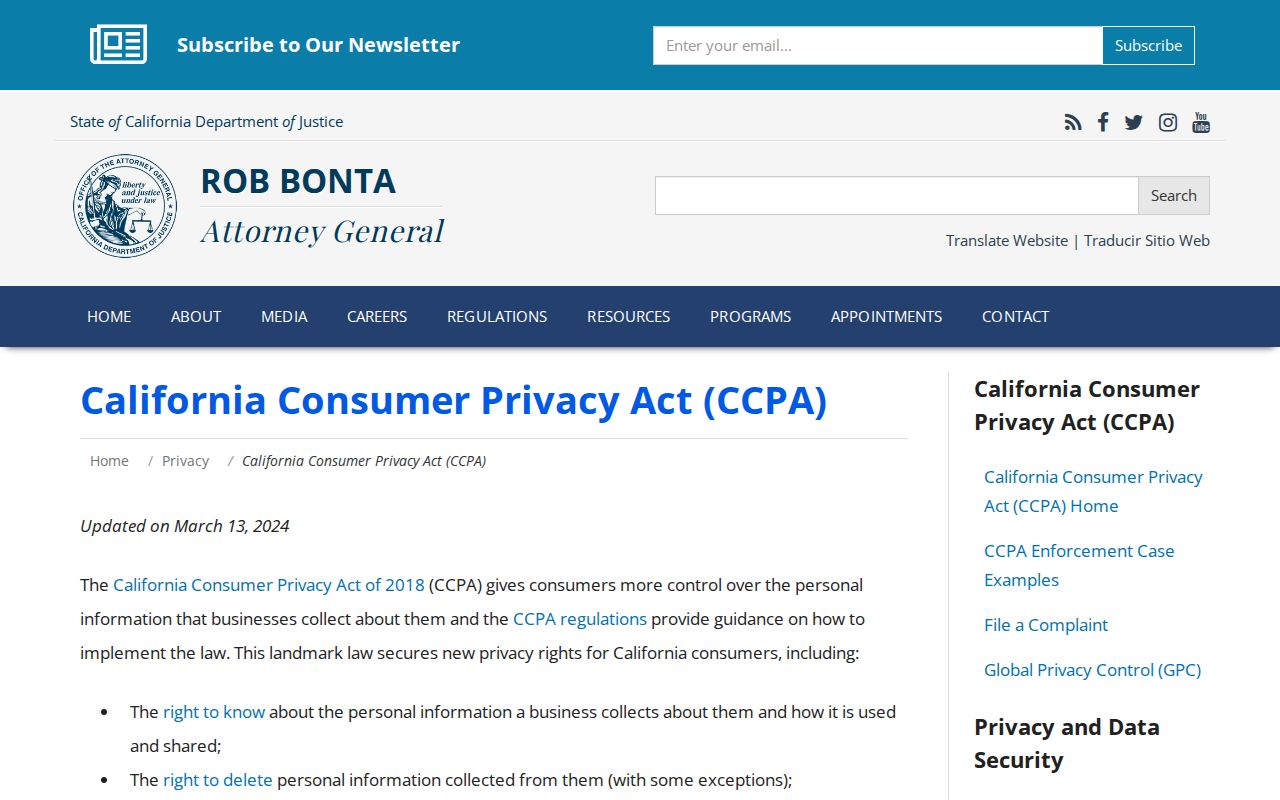
Privacy rights concern qualifying commercial data practices, not the deletion of a lawful deed or court file from its custodian.
The California Department of Consumer Affairs license search is another public affiliation source. Its capture shows how a published license result can help distinguish a name without becoming a residence record.
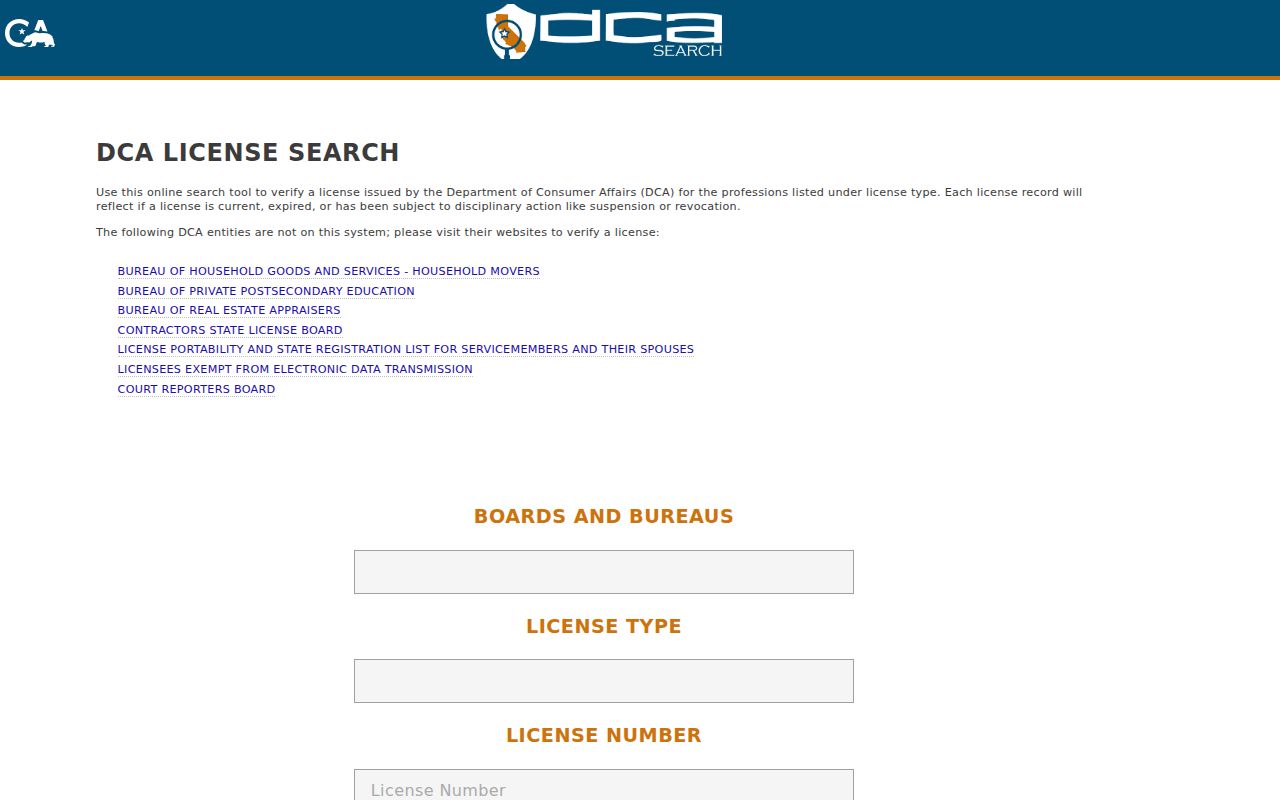
A license status, business filing, and unclaimed-property match should remain labeled as separate affiliations, each with its own date and custodian.
The State Controller capture below illustrates the official unclaimed-property search. Use it as a historical name or locality clue, then verify the result with the record custodian and a dated source before connecting it to Delano.
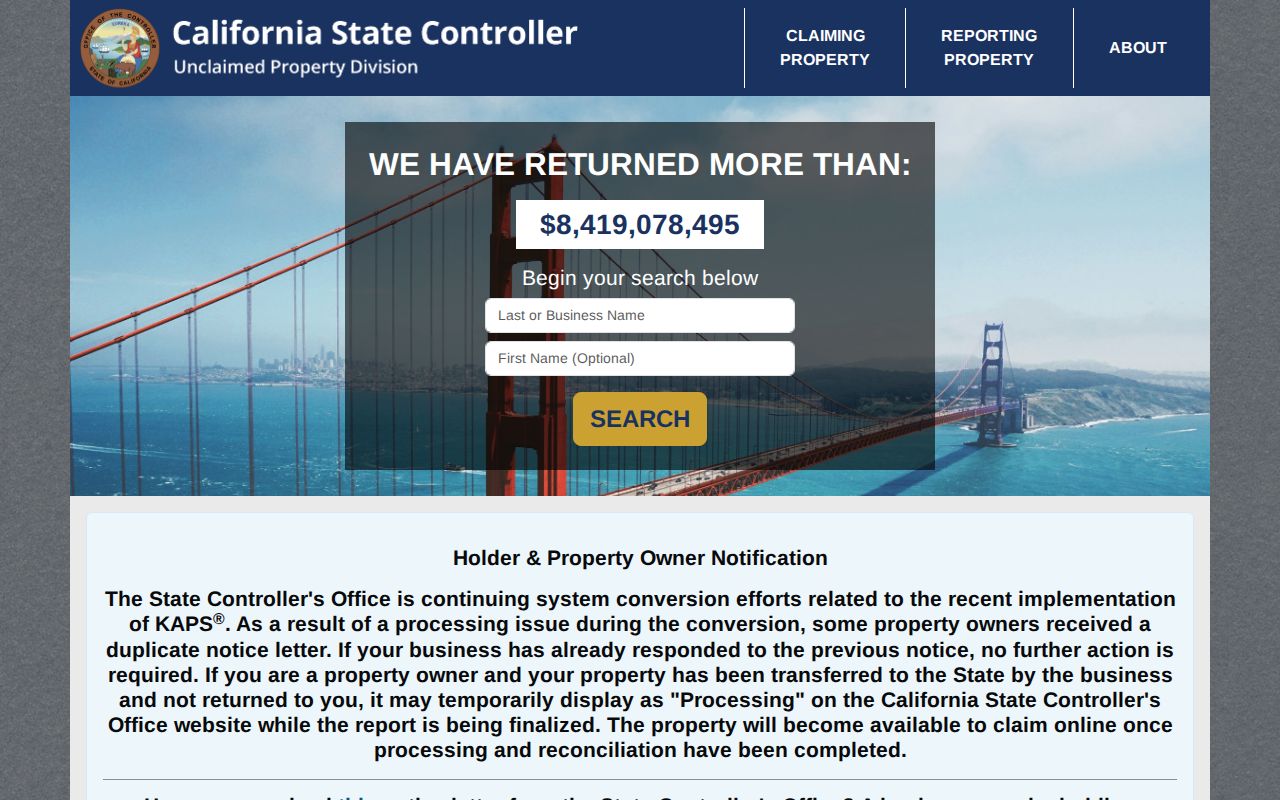
Reported property is not a residence record. It may reflect an old address, an owner’s last reported location, or a name match that needs additional identity anchors.
For a person who needs protection, California Safe at Home supplies a substitute mailing address for qualifying survivors and other protected categories. Government Code sections 6205 through 6211 govern the program, and section 6209.5 supports substitute-address use in specified real-property documents. Protected voters use confidential registration. Existing public records are not casually erased, so a missing result may be a lawful privacy feature rather than a search failure.
Recent changes deserve a date label. Kern’s 2026 vital-copy fees increased January 1, 2026. Kern GIS identifies the 2025 Final Edition as the current annual final-roll snapshot and keeps final editions back to 2004. When a Delano resident directory result matters, check the date, edition, fee sheet, and custodian before relying on it.
The Delano municipal Archive Center is a separate route for city agendas, ordinances, resolutions, contracts, and administrative records. For an identifiable existing city record, use a targeted CPRA request rather than asking the City to create a directory.
Historical Delano Resident Directories
Delano was founded as a railroad town on July 14, 1869, received its first post office in 1874, and incorporated in 1915. Kern County was created in 1866. Those milestones explain why a historical resident directory may cross federal census material, county instruments, city records after incorporation, telephone books, newspapers, and school yearbooks rather than one continuous local book.
For a name that reaches into Delano’s farm-labor, Filipino American, or Mexican American history, search spelling variants carefully. Compound surnames, initials, married names, and anglicized forms can split one household across indexes. The best unusual combination is a verified Delano High or Delano Valley High yearbook, a newspaper microfilm notice, and a Kern telephone book entry from the right period. That combination supplies name context, social detail, and a dated address without pretending to be a modern residents roll.
California State Archives holds selected county and city records and can help identify pre-digital local-government, election, court, and naturalization series. Exact Delano directory publishers, reverse-directory years, and a digitized run were not verified. That gap should stay visible.
Note: The most reliable historical directory answer is a dated entry tied to a named volume, shelf, microfilm reel, or archival collection.