
Delano Directory Holdings
The strongest local anchor for Delano city directory research is the Beale Local History Room at Kern County Library. No official digitized Delano run exists. No publisher sequence exists either. Each collection here is a real holding or a documented research route. The limits stay visible. That way, a regional volume is never mistaken for a complete Delano directory.
| Collection | Years or span | Where held | Access |
|---|---|---|---|
| Kern County telephone directories | Holdings stated from 1940 forward | Beale Local History Room | Room use; call ahead |
| Bakersfield directory volumes | From 1899 | Beale Local History Room | In person; regional context |
| Delano newspaper microfilm | Exact years not enumerated online | Beale Local History Room | Room use and research request |
| Del Ano yearbooks | 1930s issues, 1938, 1943, 1977, 1982, 1988, 1994-2001 listed | Beale Local History resources | Verify shelf years |
| Conamar yearbooks | 1982 and 1994 | Beale Local History resources | Room use |
| State Archives and OAC catalogs | Varied county and city series | California State Archives and partner catalogs | Catalog and reference request |
The Del Ano PDF carries an apparent "1939-33" typo. Check that line against the physical shelf. Telephone holdings may include Delano listings. Which volumes hold reverse sections, or which local exchanges they cover, must be confirmed inside the volume itself. Write down the call number, volume date, page, and collection during inspection, since that record is what makes an entry answer strong.
Call Ahead for Delano Directories
Beale Memorial Library's Local History Room is where most Delano city directory questions get answered. Its holdings span books, pamphlets, periodicals, newsletters, vault items, and vertical files. Together they cover more than 900 subjects. Everything stays in the room. Staff encourage advance calls. That way a microfilm reader or a requested item is waiting when you arrive.
Beale sits at 701 Truxtun Ave., Bakersfield, on the second floor; call 661-868-0771 before making the trip. The Delano Branch Library, 925 Tenth Avenue, Delano, 661-725-1078, connects you to Kern County Library. The deeper local-history collection lives at Beale, though. The Local History Room page lays out the collection and the request route.
A catalog hit does not guarantee a volume sits on an open shelf. Ask for the collection name, the year, and the format you need. For family questions, bring alternate surnames, school names, organizations, and street spellings. Staff can then search vertical files and newspapers along with the directory shelves.
The library screenshot links to the official Local History Room page. That page helps with locating the room and its request forms. The physical volume is still the authority for any entry.
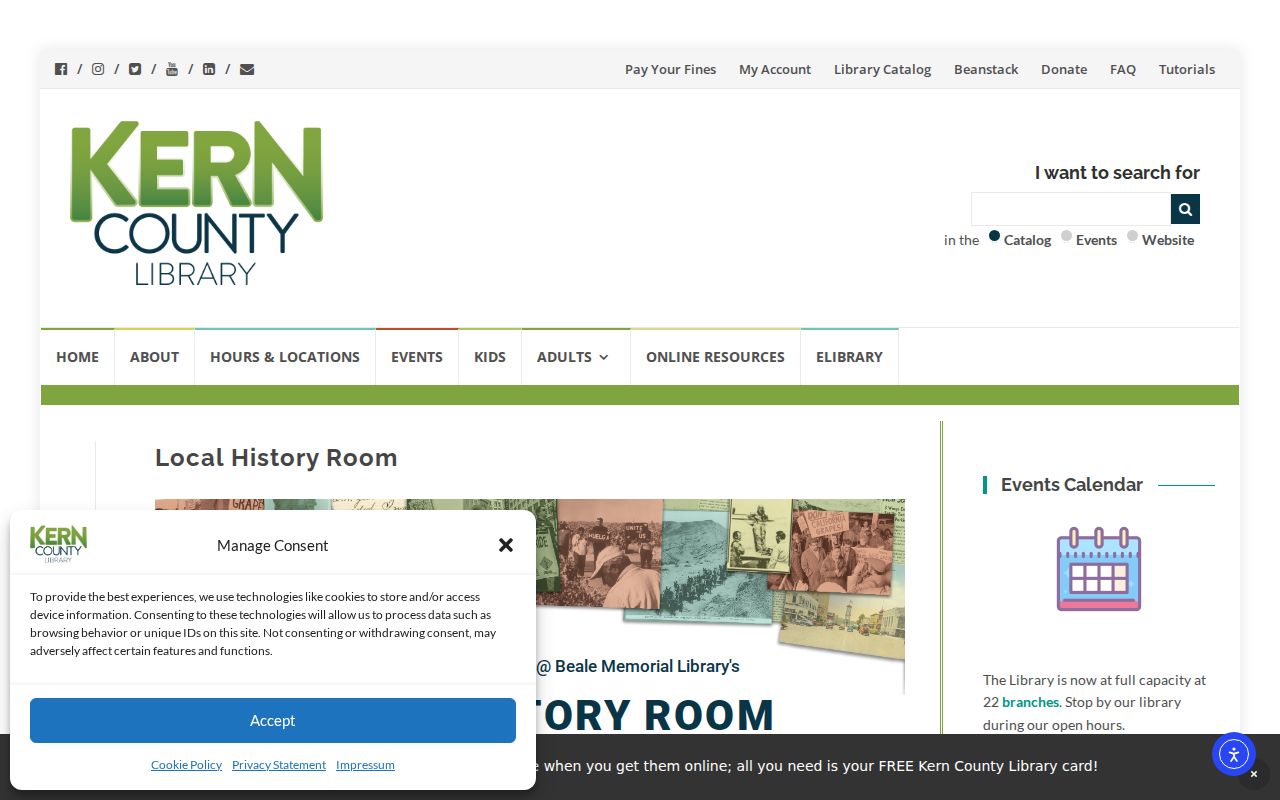
Not every target year is digitized. Calling ahead matters most when staff must stage a newspaper or telephone reel from storage for a Delano lookup.
Delano Directory Telephone Books
The telephone collection runs longest. Kern County telephone directories begin with holdings from 1940. An edition can yield a subscriber or household name, a street address, and a telephone number for its year. Some volumes add a reverse section. Confirm that feature inside the book rather than assuming it from the title.
Bakersfield volumes reach back to 1899 and give regional format and context. They are no substitute for a Delano-specific book. A county telephone directory may list Delano exchanges, while a Bakersfield volume may omit them. Keep the geographic label attached to every citation.
Note: A telephone-book hit identifies a listed subscriber for one edition date, not every person who shared that Delano address.
Reading a Delano City Directory Entry
Copy a Delano directory entry as a small record rather than a name held in memory. No official online image of a Delano entry exists. Use these fields as an inspection checklist. A volume may use some, all, or none. Photograph or transcribe the abbreviation key before interpreting any marks.
| Name | Surname and given name; a spouse may appear in parentheses, and a widow notation may preserve a relationship clue. |
|---|---|
| Occupation or affiliation | The line printed by the volume. It helps separate people with the same name, but it is not proof of a home address. |
| Residence | House number and street, with the volume’s own abbreviations for residence, boarding, or another arrangement. |
| Business address | A second location when the directory prints one. Keep it separate from the residence line. |
| Listing-status mark | A symbol that may appear in some runs. Confirm its meaning in that volume’s key before using it. |
| Cross-reference | A pointer from a spouse, former name, business, or street entry to the main listing. |
- Criss-cross section
- The address-order or street-order half of a volume when it exists. It can reverse the name-to-address search.
- Householder index
- A name-focused arrangement that points to household entries. It may not include every person in the home.
- Abbreviation key
- The volume’s decoding list for short forms, symbols, residence marks, and cross-references.
- Index versus image
- An index points to a name or page. An image or physical volume shows the context and exact printed marks.
A telephone book is thinner than a full city directory. It gives a name, address, and number. The wider biographical context drops away, so treat each page as evidence for its edition year alone.
Pair Delano Directories with Census Years
A census answers a different question than a directory. Schedules pin a household to an enumeration date. Directories catch the years between. A Delano volume may show an address change or a subscriber line that no census day records. The 72-year release rule leaves 1950 as the newest public population schedule in 2026, and NARA maps and enumeration districts can bridge a street to its correct schedule.
| 1866 | Kern County was created. Earlier land or court work may belong to predecessor counties. |
|---|---|
| 1899 | Beale holdings begin with Bakersfield directory volumes, useful for regional format and context. |
| 1940 | Kern County telephone directory holdings begin in the verified local collection. |
| 1950 | Newest public population schedule under the 72-year rule in 2026. |
| 2004 forward | Kern GIS final editions provide a modern parcel and ownership-attribute chronology. |
Let the census test household composition. Let the directory trace the address trail in between. A name that drops out of one volume may reflect a move, a changed name, a missing edition, or an editor's choice. Newspapers, probate records, deeds, and cemetery files near Delano can tell those stories apart.
Delano Directory Yearbooks
Delano High and Delano Valley High yearbooks sit alongside a Delano residents directory as a strong research companion. Beale's holdings list Del Ano issues from the 1930s, 1938, 1943, 1977, 1982, 1988, and 1994-2001, with one 1930s entry appearing to carry a typo. Conamar volumes cover 1982 and 1994. Portraits, class names, activities, and name variants survive here in ways a telephone listing never captured.
Yearbooks serve classmate and family-history work, but a school appearance does not fix a later address. Weigh the name against a newspaper notice, a directory year, a census schedule, or a record from the correct county. Start with the official Kern County yearbook holdings list for exact shelf years.
Delano Directory Newspapers
Microfilm keeps Delano newspaper history alive. Beale's reels hold far more than news. Obituaries, wedding notices, school honors, and organization rosters all sit alongside address-linked advertisements. Community items can place a family on a street at a precise moment. Years are not listed online, so bring the event date, surname variants, and a likely publication before you visit.
A newspaper item earns its keep when a residents directory trail runs dry. An obituary may name relatives or an earlier address. A wedding notice can explain a sudden surname change. School honors tie a child to a class year. Each item is a dated publication, though. Corroborate any important relationship with a vital, court, probate, or cemetery record.
When a local shelf falls short, the California State Archives catalog and its Archives research services point to related county and city series. That official route reaches records a Delano library may not hold.
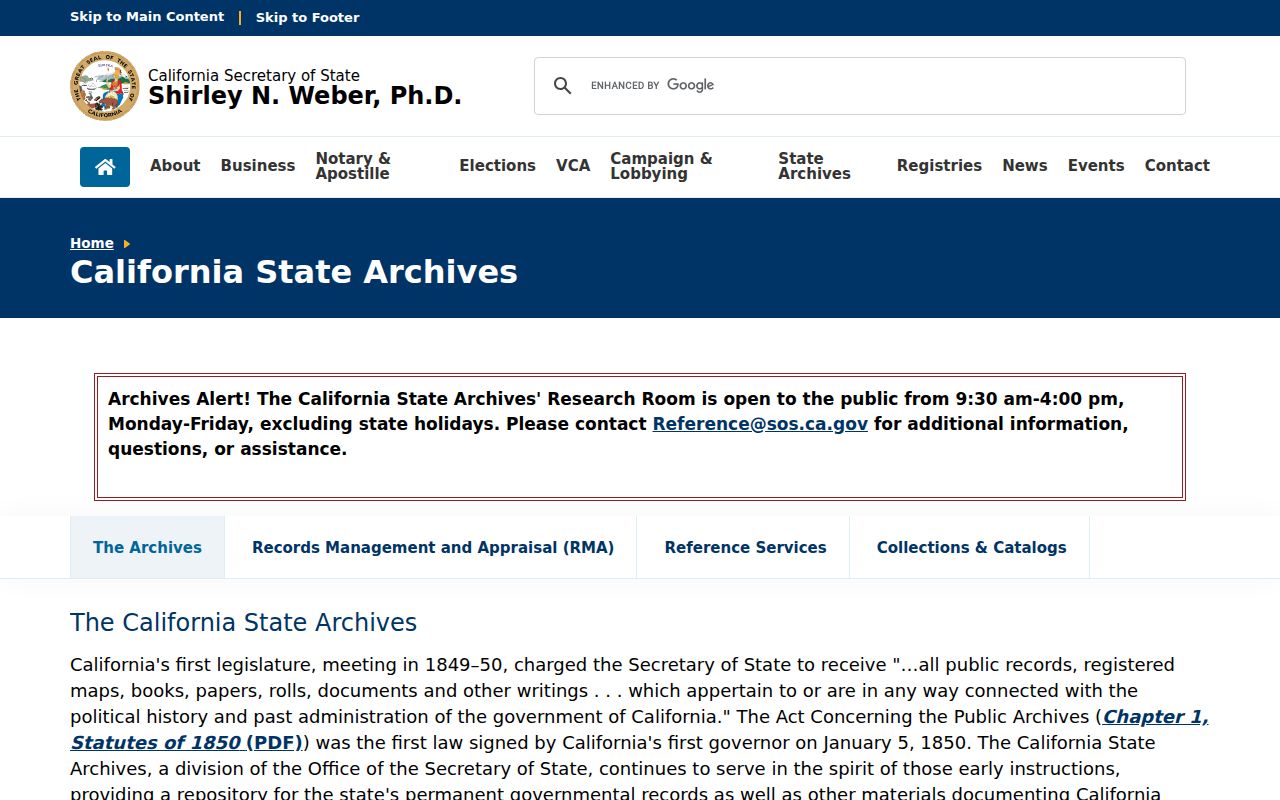
Expect archives staff to ask for a series, box, or reference request. Access rules and digitized titles shift over time, so verify the details before you travel.
Delano Directory Archive Gaps
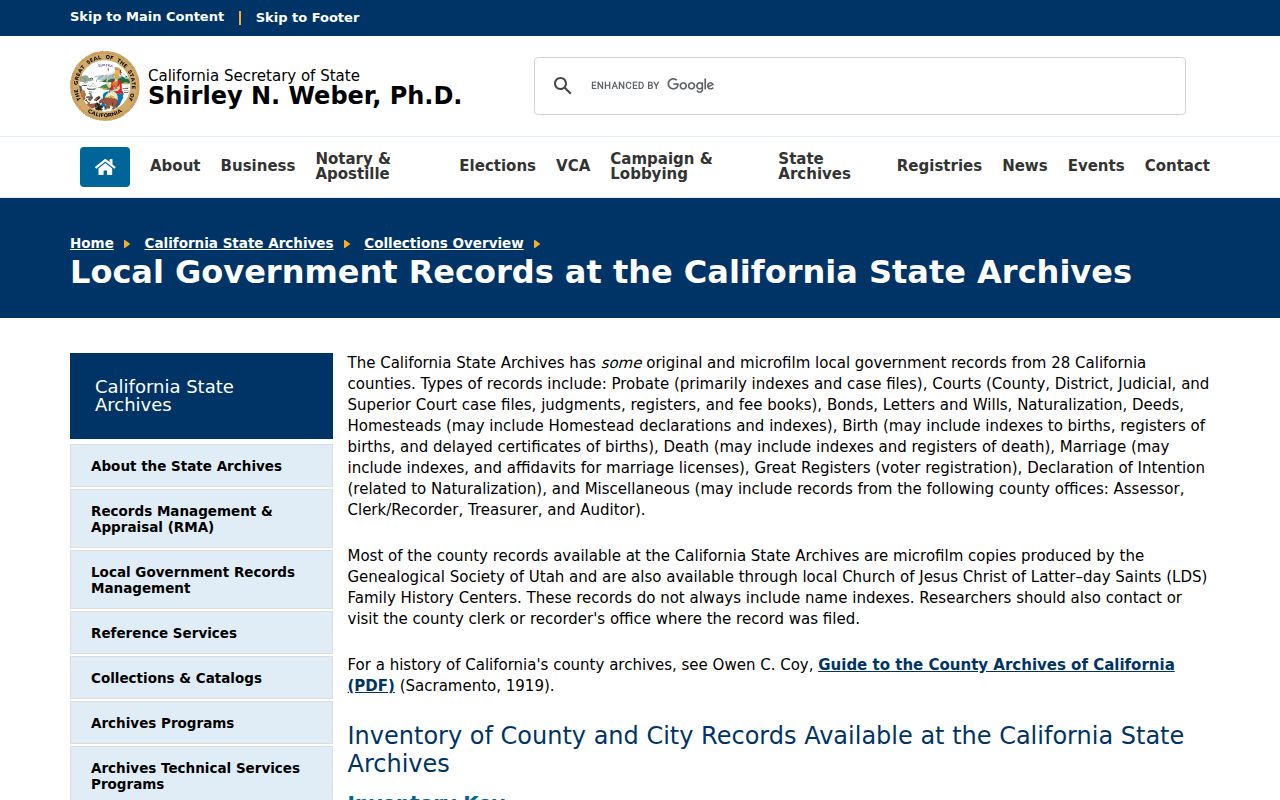
The State Archives keeps executive, legislative, and selected county records. Its county and city records guide accepts a search for Kern County paired with a record type. Those types include elections, naturalization, court, or local government. Think of it as a fallback for pre-digital material. It is not proof that any Delano directory exists online.
Start with the California county and city records collection guide to spot a possible series. Then confirm the box, date range, access condition, and reference process one by one. The Online Archive of California and Calisphere add photographs and community collections. Remember that a title record is not the same as an open image.
The Archives county and city collection page shows that route plainly. The local directory shelf can have a gap. It can lead to a stronger historical source there.
Delano's past residents left date markers worth knowing. The town began with the railroad in 1869. A post office followed in 1874. Incorporation came in 1915. None of these dates, however, proves when a missing directory publisher printed its editions.
Protect a Delano Directory Trail
Copy sellers and family-emergency scammers can twist historical names and notices to their purpose. Guard the trail. Confirm any document number and fee with the Kern Recorder. Do this before paying for a deed copy. Check an obituary-derived request through a contact you already trust. Kern Superior Court warns that fraudulent texts can push people toward fake payment pages. The court never texts asking for payment.
The Federal Trade Commission's ReportFraud portal is the official place to report a scam. That service carries the link here. A historical name is a clue. It is not a reason to send money. It is not a reason to hand over more family information, even when the story sounds urgent.
Note: Record the collection, page, source URL, and date of access, because a full citation makes a genuine find easy to check and a suspicious request easy to challenge.
Move Through Delano Directories
Treat one Delano edition as a fixed point. Keep the spelling exactly as printed. Note the address, the co-listed adults, the occupation or affiliation line, and any cross-reference. Only then should you move to the next available volume. A gap can mean a move, a changed surname, an unlisted number, or simply a missing year. It deserves a test rather than a guess.
- Choose a known year and write the surname exactly as printed, including initials, compound names, and variant spellings.
- Record every relevant adult, address, business line, abbreviation, and page number in that edition.
- Check the next volume and the prior volume. If a street section exists, reverse the address to find other names tied to the same place.
- Pair the directory year with the nearest available census and compare household members, ages, and location.
- Use newspapers, probate, cemetery evidence, or a deed when the directory trail stops, then cite the source that closes the gap.
City directory collections shine for family history because they preserve name variants and address changes between census releases. A person who vanishes may have died, moved, taken a new surname, or stopped subscribing. Newspaper and census records around that year can separate those possibilities.